.png)
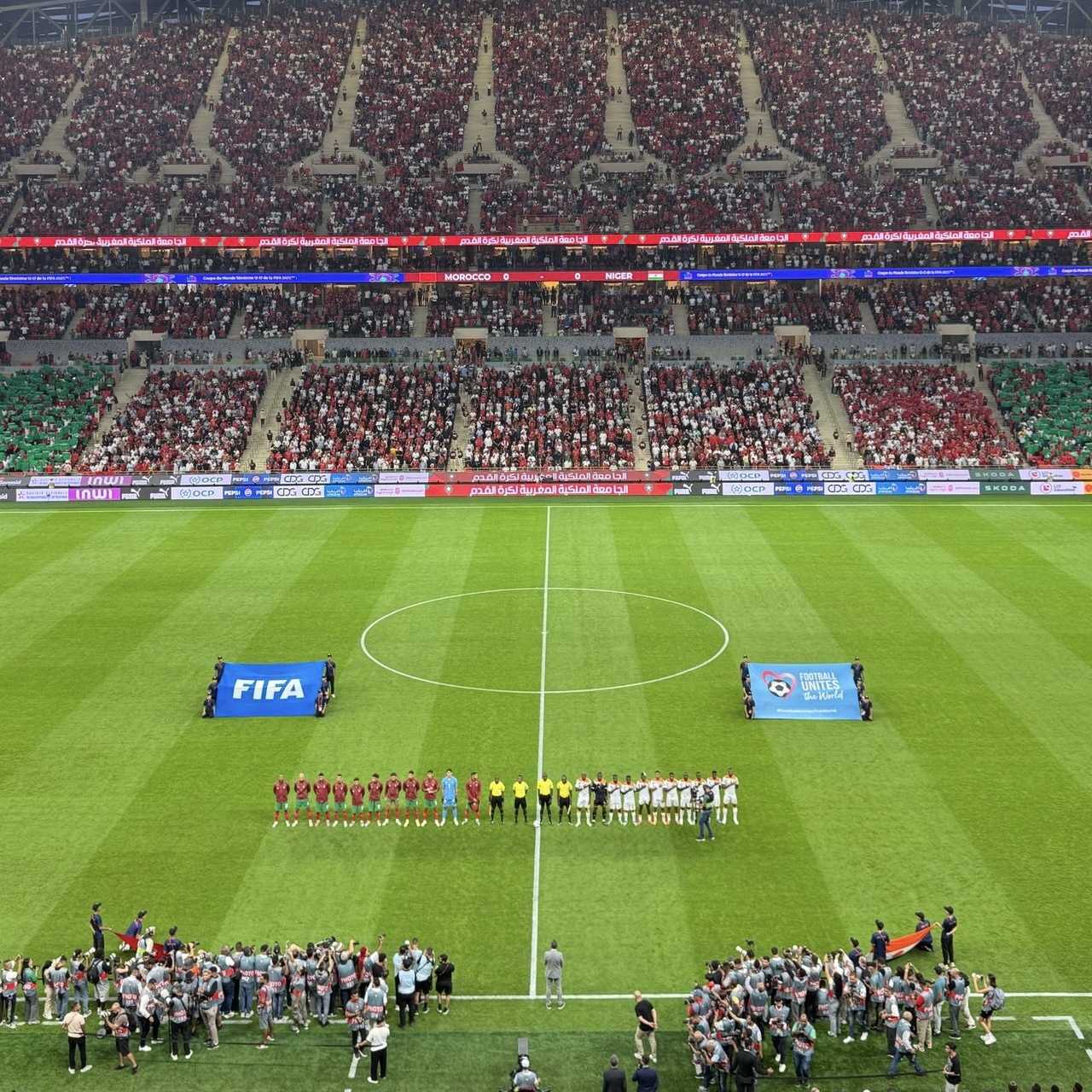
Opposition to Gianni Infantino's FIFA presidency has intensified after the Italian Football Federation (FIGC) became the latest European association to withdraw its support for his 2027 re-election bid.
The FIGC's decision follows similar moves from the Gibraltar Football Association and comes after the six Nordic football associations declared that they had lost confidence in the FIFA president.
The developments centre on the controversy surrounding FIFA Forward Enterprise (FFE), an initiative that UEFA says involved an aborted attempt to sell an interest in the FIFA World Cup to outside investors.
UEFA representatives, European FIFA Council members and presidents of national associations met in Monaco on Thursday during the 2026/27 UEFA club competition draws to discuss the continuing crisis at FIFA.
Those present unanimously mandated UEFA president Aleksander Čeferin and the administration to pursue institutional, political and legal avenues for fundamental reform, including stronger limits on presidential authority and greater accountability within FIFA.
UEFA has also demanded an independent external review of FIFA Forward Enterprise, with full access to documents, communications and decision-making records.
"FIFA cannot investigate itself and expect the football community simply to accept its conclusions," UEFA said.
The FIGC confirmed that it has withdrawn its support for Infantino's candidacy in the FIFA presidential election scheduled for March 2027.
The Italian federation said the decision was intended to express its position "clearly and transparently" and confirmed that it was acting in full agreement with UEFA and Čeferin.
The FIGC specifically cited recent initiatives promoted by Infantino concerning the governance of FIFA and the development of international competitions.
FIGC President Giovanni Malagò said Italy would continue working alongside UEFA and other European federations to promote a different vision for the sport.
"We will continue to work alongside UEFA and the other European federations to promote a vision of football based on merit, solidarity, sustainability and the central role of fans," Malagò said.
He added that the FIGC supported a model based on dialogue, consultation and shared responsibility.
"We identify with a model based on dialogue, listening and shared responsibility, which has so far allowed football to grow and innovate while at the same time safeguarding its fundamental principles," Malagò said.
The FIGC's decision represents another significant blow to Infantino's campaign, given Italy's position as one of Europe's most prominent football nations.
Gibraltar had previously endorsed Infantino's candidacy but reversed that position following the Forward Enterprise controversy.
The Gibraltar FA said the proposal and the questions surrounding its transparency, consultation and decision-making had "materially changed" its assessment.
It also cited concerns surrounding the departure of FIFA official Kevin Lamour and what the circumstances suggested about the ability of senior officials to challenge decisions and raise legitimate concerns.
The association formally informed FIFA that it could no longer maintain its endorsement of Infantino.
However, Gibraltar stressed that it had not endorsed an alternative candidate and would assess the contenders, their programmes and their approaches to governance and football development before making any future decision.
The six Nordic football associations — Denmark, Finland, Iceland, Norway, Sweden and the Faroe Islands — have also publicly backed UEFA's position.
"The six Nordic football associations have lost confidence in FIFA's president and are concerned about the organization's governance and decision-making at the highest level," they said.
The Nordic associations said they stood united with UEFA and supported the measures proposed by the European governing body and its national member associations.
They also demanded binding guarantees that FIFA's governance and competitions would never again be opened to private ownership.
"We expect FIFA to provide binding guarantees that the organization's governance or competitions will never again be opened up to private ownership," they said.
UEFA has gone further than simply opposing the Forward Enterprise proposal, arguing that the controversy has permanently damaged confidence in Infantino's leadership.
"World football now needs new leadership capable of rebuilding that trust," UEFA said.
If Infantino seeks another mandate, UEFA has pledged to work with partner confederations to ensure FIFA's member associations are offered a "credible alternative" committed to integrity, accountability, development and institutional reform.
The Italian federation's statement reinforces that position, with Malagò specifically highlighting merit, solidarity, sustainability and supporters as principles that should underpin the future of football.
Despite the continuing governance dispute, UEFA has provisionally suspended its threat to withdraw European teams from FIFA competitions during the upcoming season.
FIFA has provided UEFA with written confirmation that FIFA Forward Enterprise has been "irrevocably and permanently withdrawn" and will not return under another name, structure or form.
As a result, UEFA agreed, following consultation with its national associations, to suspend the planned withdrawal of European teams from competitions including the Women's U20 World Cup, U17 World Cup and Women's U17 World Cup.
The decision remains under constant review and could be reconsidered if circumstances change.
"While the immediate question of participation has now been resolved, the underlying crisis has not," UEFA said.
UEFA has also questioned why FIFA sought outside investors to expand development funding when the organisation currently has billions of dollars in reserves.
The European governing body said it would work with other confederations to explore the responsible release of part of FIFA's reserves for the benefit of member associations, while maintaining FIFA's financial stability.
UEFA insists that development funding is an institutional obligation rather than a presidential favour.
The Gibraltar FA similarly argued that commercial revenues should support football rather than determine its direction, while stressing the importance of transparent, collective decision-making.
For Italy, Gibraltar and the Nordic associations, the dispute is now fundamentally about how FIFA is governed and who should ultimately determine the direction of world football.
With several European associations withdrawing their previous support for Infantino and UEFA openly preparing for the possibility of an alternative candidate, the 2027 FIFA presidential election is already shaping up as a major test of the governing body's leadership.
UEFA's position remains unequivocal: "Whether it is the World Cup or an Under-15 tournament, FIFA's competitions are not for sale. Neither is the governance of our game."