.png)
FIFA has rejected mounting criticism of its leadership, insisting that President Gianni Infantino retains a democratic mandate, as a growing group of confederations publicly challenge the organisation’s governance under his presidency.
In a strongly worded statement, FIFA said it would not support or tolerate any attempt to pursue an election for the FIFA presidency outside the organisation’s statutes, democratic procedures and established governance framework.
“The FIFA President was democratically elected by FIFA’s Member Associations and continues to serve with their mandate,” FIFA said.
The statement came after recent interventions from CONMEBOL and CAF, while the Asian Football Confederation (AFC), Concacaf and UEFA issued a joint open letter calling for greater accountability and questioning the leadership of the organisation.
FIFA accused unnamed individuals of participating in a “concerted and ongoing effort” to undermine both the organisation and its president, while claiming that recent reporting had included “unsubstantiated assertions and demonstrably false claims”.
“Those who do not have the support of FIFA’s Member Associations should not seek to achieve through allegation, insinuation or misinformation what they cannot achieve through FIFA’s established democratic processes,” FIFA said.
The organisation also defended Infantino’s record, pointing to his more than three decades of involvement in European and global football and arguing that his leadership had contributed to expanding access, resources and opportunities across the game.
However, the joint letter from the AFC, Concacaf and UEFA presented a sharply different assessment of the current situation.
The three confederations argued that football’s progress over the past decade had been achieved collectively by FIFA, the confederations, member associations, clubs, players and other stakeholders, rather than by any individual.
They insisted that the dispute was “not about money”, tournament expansion or the distribution of World Cup places, but instead concerned “the integrity of the game, and the integrity of those elected to lead it.”
“Leadership in football is not a possession,” the confederations wrote. “It is not about holding – or demanding – power to be held. It is a duty of service to the football family that entrusts it.”
A major point of contention is the proposal to sell an interest in the FIFA World Cup, which was reportedly explored before being withdrawn following widespread opposition.
The three confederations rejected FIFA’s characterisation of the episode as a communication failure, arguing that it represented a serious failure of judgment and a breach of trust.
They criticised the proposal for being advanced on a compressed timeline and without what they considered meaningful consultation with FIFA’s member associations.
The confederations also questioned FIFA’s decision to conduct its own review of the episode, calling instead for a fully independent third-party investigation.
“The FIFA administration should play no role in conducting the review,” the letter stated.
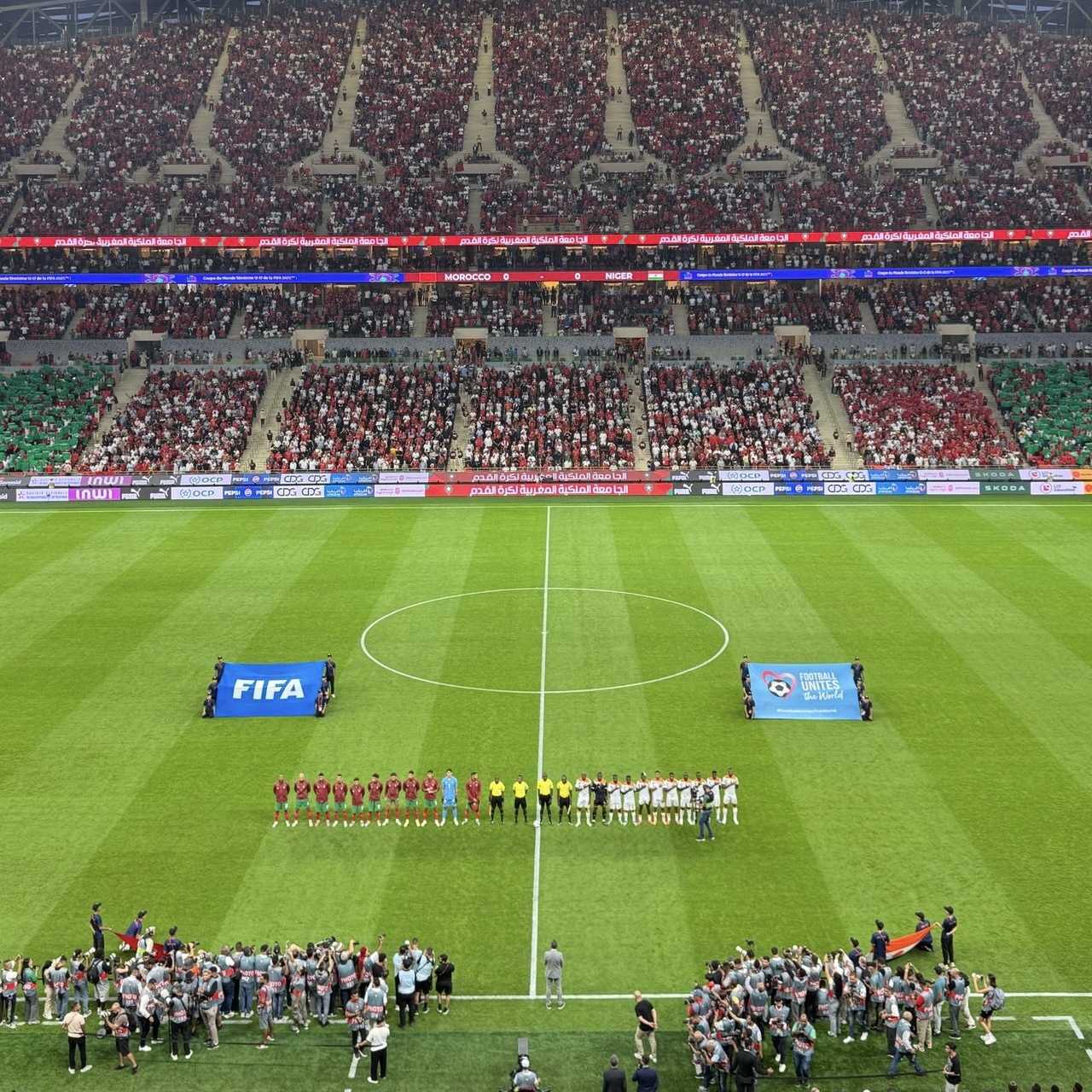
Further concerns were raised over a recent leadership meeting in Morocco. According to the confederations, only one elected official was present, while no FIFA Council members or member associations were invited to participate.
They argued that the meeting, which involved a select number of members of FIFA’s Management Committee, reinforced concerns about the concentration of decision-making within FIFA’s administration.
FIFA, meanwhile, maintained that it welcomes legitimate scrutiny but warned against what it described as the distortion of facts and amplification of unsupported allegations.
“Scrutiny is not a licence to distort facts, amplify unsubstantiated allegations or manufacture distractions designed to undermine progress,” FIFA said.
The organisation reiterated that its responsibility was to its 211 member associations and football globally, insisting that it would remain focused on strengthening FIFA and delivering for its members.
The increasingly public disagreement represents one of the most significant governance disputes to emerge around FIFA’s leadership in recent years, with major confederations now openly challenging aspects of the organisation’s decision-making and accountability.
While FIFA maintains that Infantino’s mandate comes from its member associations, the AFC, Concacaf and UEFA have signalled that the issue is ultimately about how that mandate is exercised, and whether FIFA’s leadership remains accountable to the wider football community.
Featured Image Credit: Unsplash / Street Og