.png)
AS Roma has reached a significant milestone in its long-term infrastructure plans after delivering the Technical and Economic Feasibility Study (PFTE) for its proposed new stadium on December 23, 2025.
The submission marks a crucial phase in the development of what the club describes as one of the most ambitious and modern sports facilities in Europe, bringing the project closer to its final design stage and eventual construction.
According to the club, the feasibility study is the result of extensive technical work with a strong focus on sustainability, urban integration and long-term economic viability. AS Roma says the aim is to provide the city of Rome and its supporters with a stadium that reflects the club’s history and identity while meeting the demands of modern football and entertainment.
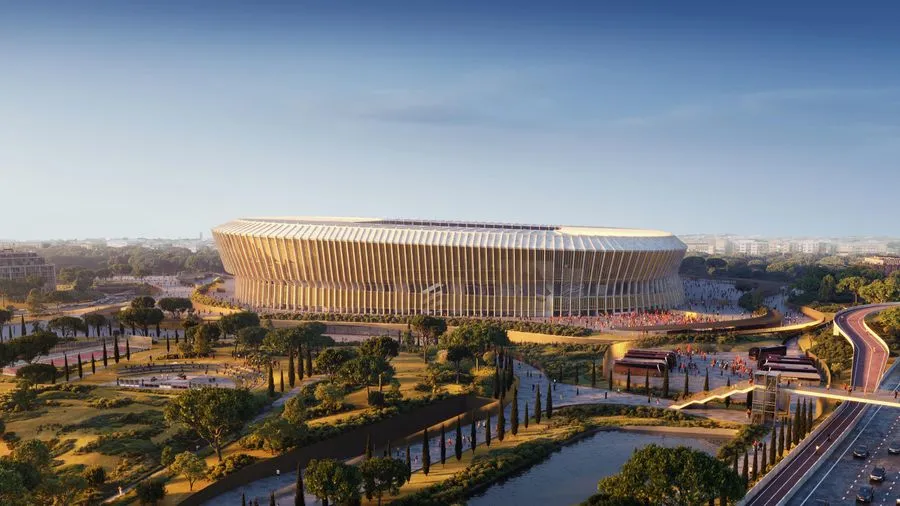
Plans for the new stadium include a monumental Curva Sud, set to become the largest in Europe, envisioned as the emotional and cultural heart of the ground. The design draws inspiration from Rome’s architectural heritage, blending traditional elements with contemporary lines and a strong connection to the surrounding territory.
Beyond matchdays, the stadium is intended to function as a multifunctional venue, offering modern spaces for fans and the wider community. The project also outlines targeted initiatives to improve transport links, services and environmental sustainability, with the goal of transforming the area into a major sports and social hub for the Italian capital.
AS Roma paid tribute to Rome Mayor Roberto Gualtieri for his support and ongoing collaboration, which the club said played a key role in reaching this stage. The club also thanked Roma Capitale institutions, local authorities and stakeholders involved in the process, noting that cooperation will continue in the coming months.
The delivery of the feasibility study is seen as a concrete step towards the start of construction and reinforces the club’s commitment to developing a modern, environmentally responsible and financially sustainable stadium.
Due to its scale, design and projected timeline, the proposed Pietralata stadium has been included among the potential venues for UEFA Euro 2032, further underlining its significance at both national and European level.
AS Roma said it remains focused on advancing the project with “passion, responsibility and ambition,” as plans for a new home move ever closer to becoming a reality.
Featured Image Credit: asroma.com